
Generative Analogue Network is a practice-based research project that uses visual methods to explore the hidden processes that underpin machine vision and AI image generation systems. It demystifies the opaque technical procedures of machine-learning models by translating them into intuitable material forms, enabling a critical exploration of algorithmic perception and creativity.
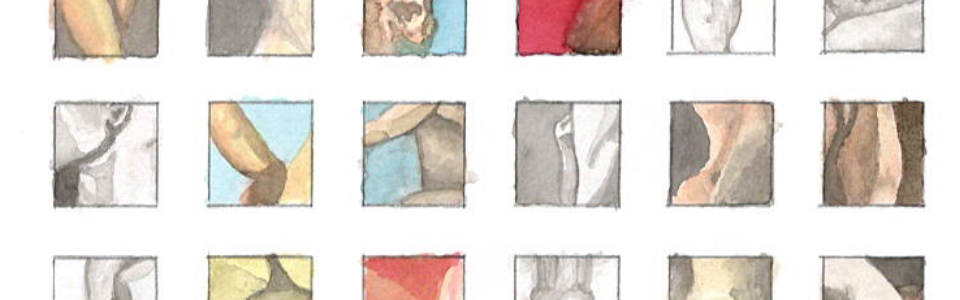
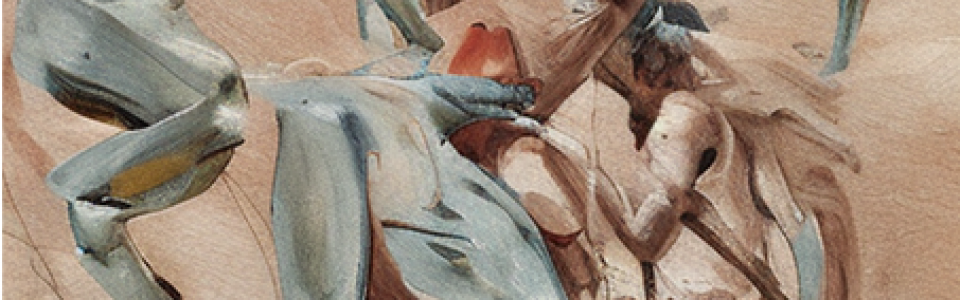
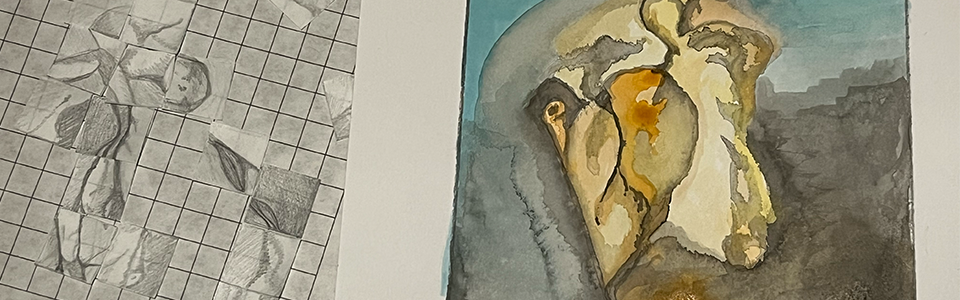
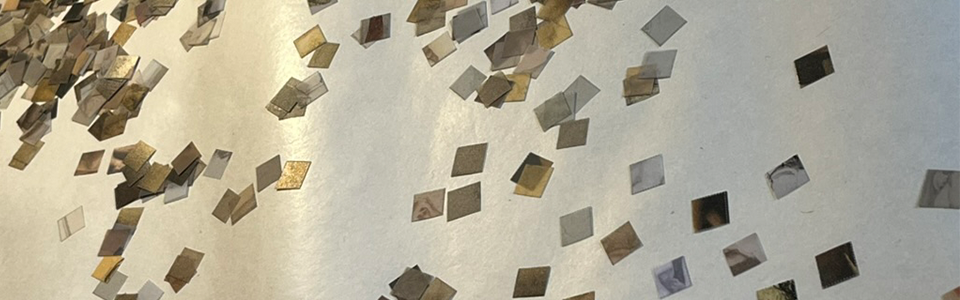
The research process departs from the idea, proposed by Adrian MacKenzie and Anna Munster, that algorithmic perception is “diagrammatic” – that computational systems “see” by mapping relations between image-data. It uses exploratory diagramming practices to stage an embodied encounter with the abstract logic of deep neural networks and the complex dimensionality of their latent spaces. Using a hand-made dataset of images as material, the practice approximates the training processes of computational models through repetitive and rule-bound analogue procedures (cutting, mark-making, recombining, etc.). Enacting these procedurescreates a rudimentary image-generation device which alienates habitual ways of seeing. The exhibition documents the distortions that manifest as images are fragmented, traced and recombined, carrying imperfections introduced by eye and hand. It compares the outcomes to the morphing forms produced by a digital modeltrained on the same dataset, illustrating the hallucinatory character of AI vision and its embodied analogue. In this way, machine-learning algorithms become a site for material experimentation and creative potentiality.
A private viewing will be held on 5th March 2026.